
Nate’s Unsteady Authority
The Drover's WifeThis thread follows Nate Clintoff’s attempt to establish law in Everton as practical inexperience, colonial assumptions, and his concern for Molly expose the limits of his new authority.
increasing Bearing strength in each event
 decreasing
Bearing strength in each eventdecreasingA New Sergeant Arrives

An Appointment in the Mountains
A fresh start
Nate accepts a post as the new keeper of the peace in Everton after years of clerical work in the British Army. His war injury has left him with a damaged leg, and the desk-bound role has worsened the melancholia that Louisa calls his dark place.
The appointment promises active work and renewed purpose. Nate imagines a manageable town and a chance to build a life in a new country with Louisa and Samuel Adrian Clintoff.
Expectations meet uncertainty
The family’s journey inland includes a dangerous river crossing that sweeps away provisions and nearly separates them. Nate’s confidence as a soldier cannot substitute for experience with the land and its waterways.
By the time he reaches Everton, he is already learning that his authority will operate in conditions he has not been prepared to manage. The position offers a new beginning, but it does not give him control over the country or the people living in it.
The First Murder Case
An Investigation Without Support
A brutal beginning
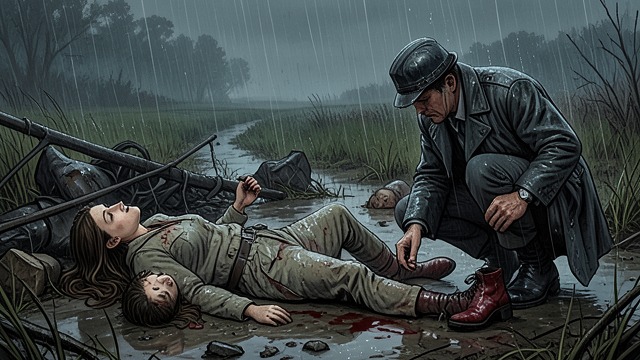
Nate’s first major assignment is the murder of Ulla Edwards and her children. He examines the bodies, records details, and tries to infer the killer’s method, but he has only one assistant and no immediate reinforcements.
The case arrives before he has been sworn in or has established a settled working relationship with the district. The grand promise of light duties and a quiet town gives way to a crime scene and a grieving community.
Local pressure
Frank Edwards says he intends to leave, while Father McGuinness reminds Nate that the town depends on the Edwards family’s investment. Judge Eisenmangher likewise makes clear that solving the case matters to Everton’s future and to Nate’s reputation.
Nate must investigate while facing civic and political pressure to produce a result. His new office is not simply an instrument of justice; it is also expected to reassure settlers and protect a fragile town project.
Law in a Lawless Town

Authority as Public Performance
A town testing its new officer
On sale day, drunken stockmen fill the jail and fights spill into the street. Nate throws punches himself to establish that the new sergeant can handle the disorder, while Trooper Spencer Leslie struggles to keep up with the volume of arrests.
The public cheers Nate’s toughness, making law enforcement partly a performance of strength. The applause offers short-term credibility but does not provide the resources or judgment needed for the deeper problems in the district.
Prejudice in the investigation
Nate sees the wanted poster of Yadaka and hears openly racist assumptions from locals who treat Aboriginal identity as proof of guilt. He has read official recommendations favoring dispersal and recognizes that the system is built on attitudes he finds appalling.
Still, he is operating inside that system and initially relies on its reports and procedures. His unease grows as the gap widens between the law’s claims to order and the racial violence it permits.
A Case Against Molly

Concern Becomes Suspicion
Contradictions in the account
Nate notices inconsistencies in Molly’s account of her husband’s absence. Her story that Joe is away droving conflicts with what Robert Parsen says about the missed drove, and Nate learns that Joe’s horse has been found running with brumbies.
He also senses the smell of a shallow grave near the woodheap. His concern for Molly’s safety shifts into suspicion that she may have killed her husband, though he does not yet understand the history of abuse behind the hidden burial.
The law takes control
When Spencer Leslie reaches Molly’s property and identifies Yadaka, the situation collapses into armed confrontation. Molly kills Spencer during the struggle, and Nate arrives too late to prevent the escalation.
The authorities arrest Molly and frame the case through the evidence of the dead trooper and John McPharlen, while Yadaka is dead and Danny is absent. Nate must decide what his oath requires even as he sees the battered woman, the unequal conditions around her, and the inadequacy of the system he represents.
Duty Against Compassion
The Cost of Upholding the Law
A conviction he doubts
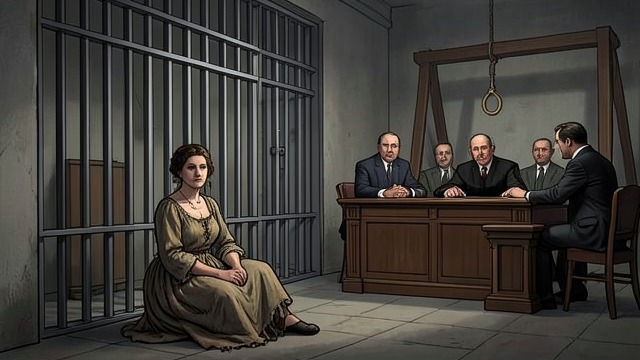
Nate keeps Molly in the Everton jailhouse while a male jury convicts her and the court sentences her to death. He knows the proceedings are biased and recognizes that Louisa’s argument about cumulative abuse has force, but he believes he cannot disregard the evidence against Molly, especially the death of Spencer Leslie.
His decision strains his marriage as Louisa argues that violence against women must be understood in context. Nate’s role forces him to choose between legal procedure and the possibility that procedure has made justice impossible.
The final failure
As Molly awaits execution, Nate tries to learn where her children have gone and offers help, but she refuses to disclose their location. He hopes they may be safe and feels guilty that the official process has made her death seem inevitable.
At the gallows, he cannot look at Molly and struggles to give the final signal. His hesitation does not stop the execution. The outcome leaves him with an authority that has enforced the court’s sentence but has not protected the woman or the children it claimed to serve.
1893, before the Clintoffs reach Everton
The first days of Nate’s appointment in June 1893
Everton’s major sale day, June 1893
The full-moon night and morning of Molly’s arrest
Molly’s imprisonment and execution in winter 1893
